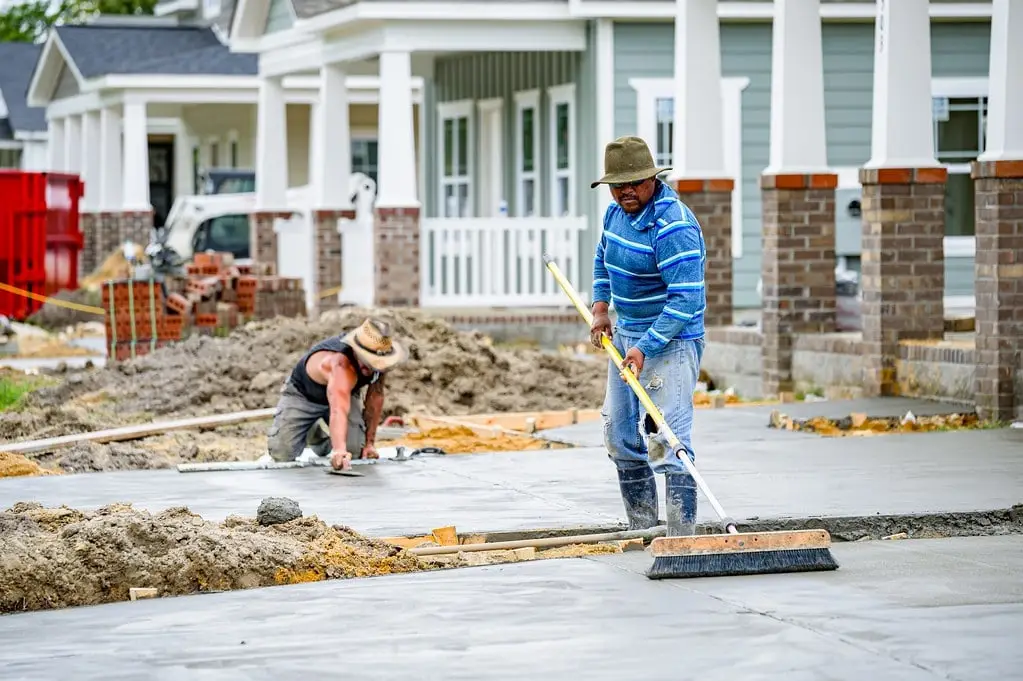
Concrete doesn’t dry; it cures. It hardens through a chemical reaction between cement and water, and that reaction is sensitive to temperature and moisture, especially during the first few days. That’s why the weather on pour day, and in the week that follows, has so much to do with how a driveway, patio or walkway holds up over the next few decades.
Utah’s four-season climate gives us a wide window for concrete work, but each season asks for a slightly different plan.
The short answer: late spring and early fall
For most projects in Centerville and the rest of Davis County, the most forgiving conditions come in late spring, once hard frosts are behind us, and early fall, before nights start dropping below freezing. Mild temperatures let concrete gain strength steadily, the ground isn’t frozen, and there’s less risk of the surface drying out too fast.
That doesn’t mean other seasons are off-limits. Summer pours are common and turn out well with the right timing, and winter pours are possible with protection. It just means spring and fall need the fewest workarounds.
Spring: watch the ground and the forecast
Spring along the Wasatch Front brings snowmelt, rain and swings between warm afternoons and cold nights. A few things matter most:
- Ground conditions. Concrete shouldn’t be placed on frozen or saturated ground. Soft, wet subgrade can settle later, which is a leading cause of cracked and sunken slabs. We check the base before forming.
- Late cold snaps. A warm week in April can be followed by a freezing night. If one is forecast right after a pour, we protect the new concrete with blankets.
- Rain. Heavy rain on freshly placed concrete can damage the surface, so we plan around storms and keep covers on hand.
Spring is also when schedules fill up, so getting your estimate early helps you land the timing you want.
Summer: pour early, cure carefully
Summer is a great time to pour, but Utah summers are hot and dry, and that combination is hard on fresh concrete. Heat speeds up setting, and low humidity, sun and wind pull water out of the surface quickly. If the surface dries faster than the concrete underneath can keep up, small plastic shrinkage cracks can form within hours.
On summer jobs we:
- Start early in the morning so finishing happens before the hottest part of the day
- Dampen the base and forms so they don’t soak water out of the mix
- Keep the surface from drying too fast during finishing
- Start curing as soon as finishing is done, and keep it going through the first several days
Curing is the most overlooked step in concrete work. It means keeping enough moisture in the slab, at a reasonable temperature, for long enough that it reaches its intended strength and durability. A well-cured surface holds up better against Utah winters.
Fall: the sweet spot, with a deadline
Early fall often has the best pouring weather of the year: warm days, cool nights and less wind. The catch is the calendar. New exterior concrete benefits from time to gain strength and dry out before its first freeze-thaw season, and it shouldn’t see deicing salts during its first winter.
If you’re planning a fall driveway, patio or sidewalk, aim to have it poured well before nights turn freezing. That usually means booking your estimate by late summer.
Winter: possible, with protection
We get asked often: can you pour concrete in winter in Utah? Yes, but it takes more planning.
Industry guidance treats it as cold-weather concreting when air temperatures fall to, or are expected to fall below, 40°F during the protection period. In those conditions:
- The concrete has to be placed on ground that isn’t frozen, so frost may need to be thawed out first
- Fresh concrete must be protected from freezing until it gains enough strength, usually with insulated blankets and sometimes heated enclosures
- The mix may be adjusted for cold weather, for example with heated water or set-accelerating admixtures
- Curing and protection take longer, and finishing has to wait on slower setting
Some winter work can’t wait, like replacing a broken step or a dangerous section of sidewalk. For larger projects, we’ll talk honestly about whether a winter pour is worth the extra protection, or whether waiting a few months gives you a better result.
What every pour needs, in any season
No matter when your concrete goes in, a few things decide how long it lasts in Utah:
- A compacted base and good drainage, so water runs off and doesn’t collect under the slab
- Air-entrained concrete for exterior work. Tiny air bubbles give freezing water room to expand, which helps the surface resist freeze-thaw damage and scaling.
- Control joints in the right places, so shrinkage cracks form along straight, planned lines
- Proper curing, especially in the first week
- No deicing salts the first winter, and careful deicer use after that
Our concrete and Utah weather guide goes deeper on freeze-thaw, deicers and seasonal care.
Planning your project
The best time to pour is the window that fits your project, your schedule and the forecast. A few practical tips:
- Get your estimate early. Spring and fall fill up first.
- Plan around the cure. You’ll need to stay off new concrete for a while: light foot traffic after a day or two, and vehicles after about a week on a typical driveway, longer in cold weather. We’ll give you a timeline for your project.
- Think about the whole season. A patio poured in early fall is ready for next summer, and a driveway poured in spring has all summer to cure before its first winter.
Ready to pick a date? Request a free estimate or call (801) 590-4185, and we’ll help you choose the right window for your driveway, patio or replacement project anywhere in Centerville and Davis County.