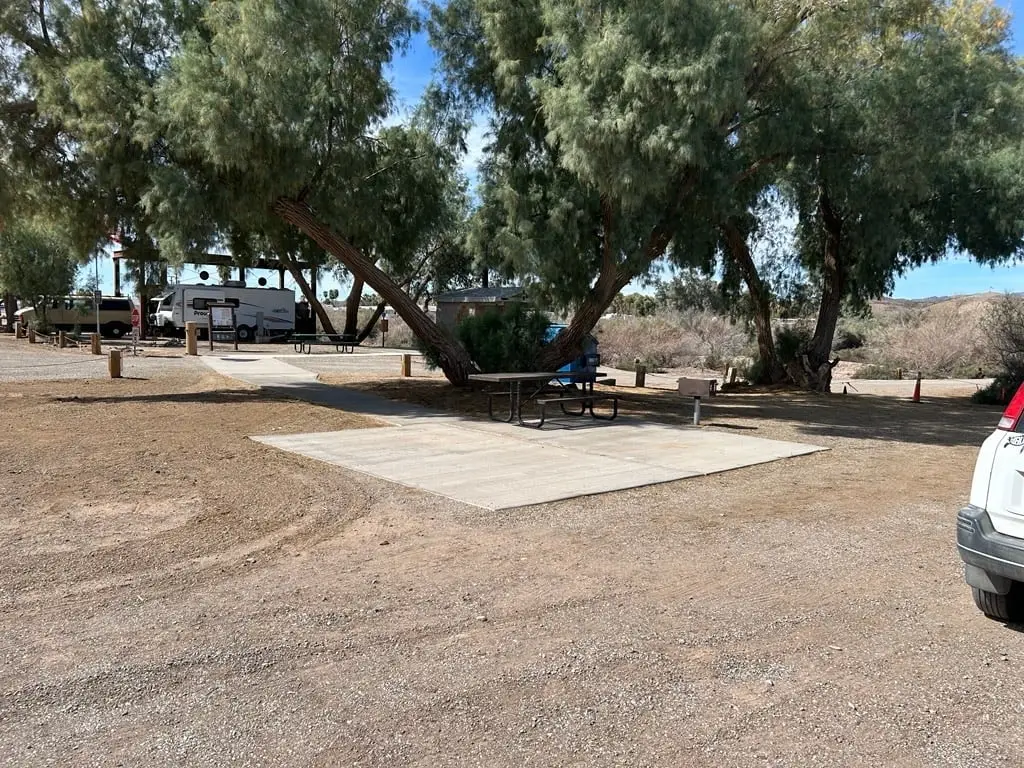
An RV pad keeps a heavy vehicle stable, level and off the lawn. It’s also one of the concrete projects where corners get cut most often: a pad poured like a patio will crack under the weight of a loaded trailer or motorhome. Planning for the load and the approach path makes the difference.
What RV and parking pad projects include
- RV pads for motorhomes, travel trailers and fifth wheels.
- Trailer and boat pads in side yards or behind gates.
- Extra parking pads beside the driveway for another vehicle.
- Driveway widening that doubles as an RV approach. See concrete driveways.
- Gravel-to-concrete upgrades for existing parking areas that rut, puddle or spread onto the lawn.
Signs it’s time for a concrete pad
- The RV or trailer is parked on grass or gravel and is sinking, leaning or leaving ruts.
- Gravel keeps migrating onto the lawn, street or driveway.
- Water collects around the tires or jacks, or the parking spot turns muddy in spring.
- You need extra off-street parking for another vehicle.
Planning considerations
Size, turning room and approach
Measure the vehicle with hitches, slide-outs and mirrors, then plan for walking room, open compartments and the path in and out. A pad in a side yard may need a wider approach so a trailer can be backed in without clipping fences or landscaping. Gates should be wide enough to clear the vehicle comfortably.
Load and thickness
RVs, loaded trailers and boats put a lot of weight on a few tires and stabilizer jacks. RV pads are typically built thicker than patios and walkways and reinforced for that load. The right design depends on vehicle weight and soil conditions, so share the specifications with the contractor. Also consider the path to the pad: if the vehicle crosses an existing driveway or sidewalk that was built for cars, that concrete can crack too.
Base and drainage
Heavy loads make base preparation critical. Soft soil should be removed, the subgrade compacted, and a compacted gravel base placed. The pad should slope so water drains away from the house and off the pad, not toward a neighbor’s yard or the foundation. Centerville’s drainage information counts paved surfaces as impervious, so a large new pad adds runoff that needs somewhere to go.
Connection to the existing driveway
Where a pad meets an existing driveway, joints should be placed so the two slabs can move independently. Grades should match closely so there’s no lip, and the transition should be planned so water doesn’t collect at the seam.
Setbacks, city rules and HOAs
Where you can park an RV, and whether the approach at the street can change, can depend on zoning rules, easements and HOA covenants. If the project widens or adds a curb cut, Centerville City Public Works has an Approach Permit Application and requirements for drive-approach plans. Confirm what applies with Centerville City before construction. The project planning guide links to other city resources.
RV pads and Centerville winters
A parked RV or trailer shades part of the pad and can drip snowmelt in the same spots all winter. Good slope and drainage keep that water from sitting on the concrete and freezing. Air-entrained concrete, proper curing and a sensible deicer plan all help the pad hold up to freeze-thaw cycles. See the concrete and Utah weather guide for details.
How an RV pad project typically goes
- Measure and plan: vehicle dimensions, approach path, gate width, slope and drainage.
- Approvals and locates: check city and HOA requirements and have utilities marked through Blue Stakes of Utah 811.
- Excavation and base: remove sod and soft soil, compact the subgrade, and place and compact the base.
- Forms and reinforcement: set forms to grade and place reinforcement for the vehicle load.
- Placement and finishing: pour, finish with a slip-resistant texture, and cut control joints.
- Curing: protect the pad and keep heavy vehicles off until it’s ready.
What affects the cost of an RV pad
- Size: RV pads are large, so square footage drives the total.
- Thickness and reinforcement: heavier designs use more concrete and steel.
- Site preparation: sod removal, excavation, grading and base depth.
- Access: tight side yards may need a concrete pump.
- Approach and driveway work: curb cuts, widening and connections to existing concrete.
- Fencing and gates: removing or modifying fences to fit the vehicle.
When you request a quote, include the vehicle type and length and where you’d like the pad. That helps the contractor plan the right layout from the start.