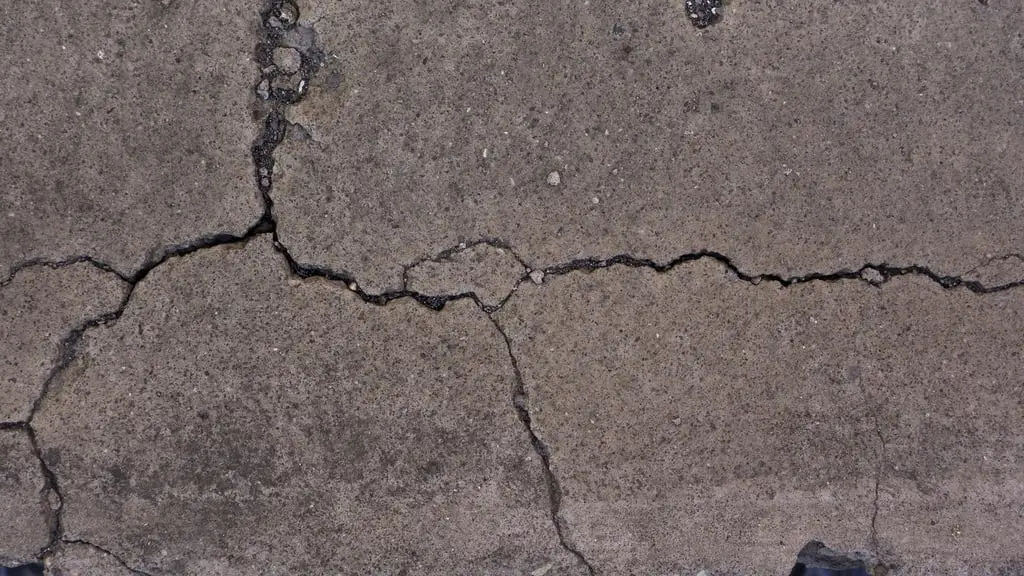
Most concrete eventually cracks. The question is whether the damage is on the surface, where repair can buy years of service, or a sign that the slab has lost support underneath, where patching only delays the inevitable. An honest assessment separates the two before you spend money.
What concrete repair covers
- Crack sealing: cleaning out cracks and filling them with a flexible sealant or repair material to keep water and debris out.
- Scaling and spalling repair: patching or resurfacing areas where the surface has flaked, pitted or popped out.
- Edge and corner repair: rebuilding chipped slab edges and step corners.
- Joint maintenance: resealing expansion and control joints, especially where a slab meets the house or garage.
- Slab lifting assessment: evaluating whether a sunken panel can be raised or needs to be replaced.
- Partial replacement: cutting out and re-pouring a single failed panel between joints when a patch won’t hold.
Signs your concrete needs repair
- Cracks wider than a hairline, or cracks that collect water and weeds.
- Flaking, peeling or pitted surfaces, especially where cars park or snow melts.
- Broken corners and chipped edges along driveways, walks and steps.
- Gaps along the garage slab, foundation or between panels.
- A panel that has dropped slightly, creating a small trip edge.
When repair makes sense, and when it doesn’t
Repair tends to be the right call when the slab is still well supported, the damage is limited to certain areas, and the concrete around it is sound. Examples include a few isolated cracks, light surface scaling in one area, or a chipped step corner.
Repair tends to be a poor investment when damage is widespread, cracks keep growing, panels have heaved or sunk significantly, or the same area has been patched before and failed again. Those symptoms usually mean the base or drainage underneath is the real problem, and a new surface on top won’t fix it. In those cases concrete replacement is often the better long-term value. The repair vs. replacement guide goes through the decision in more detail.
Understanding common types of damage
Shrinkage and hairline cracks
Thin cracks that appear as concrete cures and dries are very common. They’re usually cosmetic, but sealing them helps keep water out in winter.
Settlement cracks
When soil under a slab compacts, erodes or was never properly compacted, part of the slab loses support and cracks, often with one side dropping. Sealing these cracks doesn’t address the cause. Watch for drainage problems nearby, such as downspouts or irrigation dumping water beside the slab.
Scaling
Scaling is flaking of the top surface, exposing rough aggregate beneath. In northern Utah it’s commonly tied to freeze-thaw cycles, deicing chemicals and moisture, and it can be worse where the surface was over-finished or not cured well when it was placed.
Spalling and pop-outs
Deeper chips and craters can come from freeze-thaw damage, corroding reinforcement too close to the surface, or weak aggregate particles near the top of the slab. Repair depends on the cause and depth.
Centerville climate and repairs
Winter is when many repairs get noticed and when many repair materials perform worst. Most crack sealants and patching products need dry surfaces and mild temperatures to bond and cure, so repair work is usually scheduled for spring through fall. If you see new cracks or scaling after winter, note the locations and have them assessed once the weather allows. Sealing cracks before the next winter helps limit freeze-thaw damage. More on seasonal effects is in the concrete and Utah weather guide.
How a repair project typically goes
- Assessment: the contractor looks at the damage, checks for movement and drainage issues, and explains repair versus replacement options.
- Preparation: cracks are cleaned or routed out, loose material is removed, and surfaces are prepared so repair materials can bond.
- Repair: sealants, patching compounds or resurfacing materials are applied, or failed panels are cut out and re-poured.
- Curing and protection: the repair is protected from traffic and weather while it cures.
- Maintenance plan: recommendations for sealing, drainage fixes and deicer use to extend the repair’s life.
What affects the cost of concrete repair
- Type of damage: crack sealing, resurfacing, lifting and panel replacement are very different jobs.
- Extent: the linear feet of cracks or square footage of damaged surface.
- Materials: sealants, patching mortars and overlays vary widely in cost and durability.
- Access and preparation: how much cleaning, grinding or removal is needed first.
- Underlying fixes: correcting drainage or replacing base material adds scope but makes the repair last.
Details help. When you request a quote, describe where the damage is, roughly how large the area is and whether it seems to be getting worse, and keep a few photos handy for the follow-up conversation.