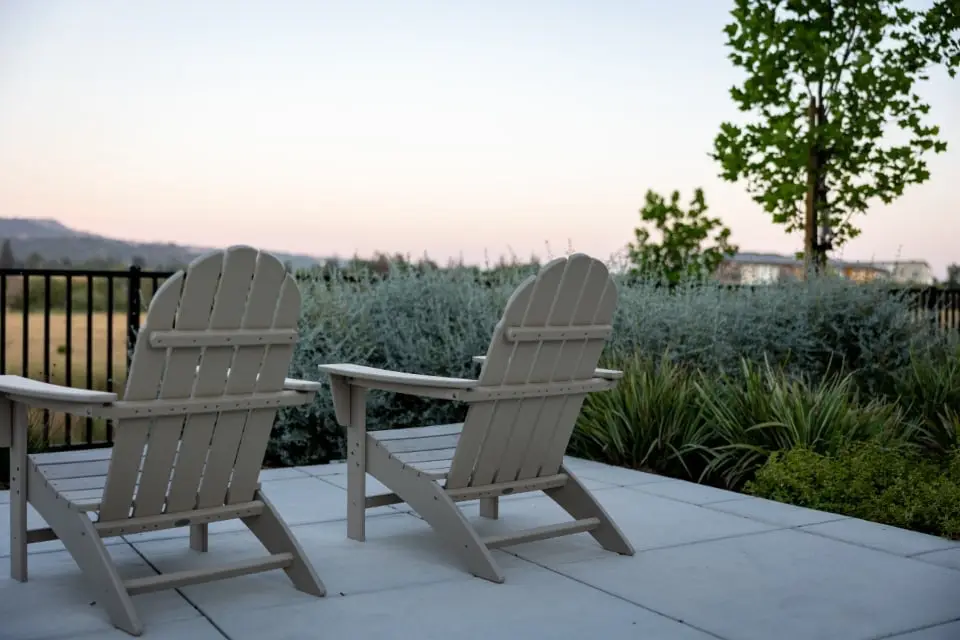
A patio is usually the simplest concrete project on a property, but the details still decide whether it stays flat, drains properly and looks good for years. Most patio problems come from three things: a slab that is too small for how it gets used, water that drains toward the house, and a base that was never properly compacted.
Where Centerville homeowners use concrete patios
Patios in this area typically serve one or more of these purposes:
- A dining or grilling area just outside the back door or kitchen slider.
- A lounge area for outdoor furniture, often paired with a fire pit or shade structure.
- A hot tub or outdoor kitchen base, where the slab needs to handle concentrated weight.
- A transition surface between the house, lawn and garden, often tied together with walkways and steps.
- A replacement or extension for an older patio that has cracked, settled or simply feels too small.
Signs it’s time for a new or bigger patio
- The existing patio has sunk toward the house, so water runs back against the foundation.
- Large cracks with uneven edges have become trip hazards.
- The surface is flaking or pitted from years of freeze-thaw and snowmelt.
- Furniture hangs off the edges or there’s no room to walk around the table.
- You want to replace a deck that needs ongoing maintenance with a lower-maintenance surface at ground level.
Planning considerations that matter
Size and layout
Measure your furniture and mark the outline in the yard before committing. Think about where people walk from the door to the yard, where the sun sits in late afternoon, and whether a grill needs clearance from the house. Curves look great but add forming work; simple rectangles are the most economical to build.
Drainage and slope
A patio should slope gently away from the house so rain and snowmelt run toward the yard. Also consider where that water ends up: onto a lawn that can absorb it, not into a neighbor’s yard or back toward a window well. Centerville’s drainage information counts patios among impervious surfaces, so a large new patio changes how much water runs off your lot.
Base preparation
Backyard soil has often been disturbed by landscaping, irrigation trenches and old garden beds. Soft or organic material should be removed and the subgrade compacted before a gravel base goes down. Skipping this step is one of the most common reasons patios crack and settle within a few years.
Thickness, reinforcement and joints
Patios that only see foot traffic and furniture are typically thinner than driveways, while areas under hot tubs or outdoor kitchens may need a heavier design. Reinforcement and properly spaced control joints help control cracking. Joint lines can also be laid out to look deliberate, dividing a large patio into even squares or rectangles.
Utilities and connections
Before the pour, think about anything that should run under the slab: conduit for lighting or a hot tub, a gas line for a fire table or grill, or irrigation sleeves so sprinkler lines can pass underneath. It is far easier to place a sleeve now than to cut concrete later. Underground utilities must be located through Blue Stakes of Utah 811 before excavation.
Finish options
- Broom finish: slightly textured, slip-resistant and the most economical.
- Smooth or light-trowel finish: clean and modern, but it can be slippery when wet or icy.
- Exposed aggregate: the surface paste is removed to reveal the stones, giving texture and grip.
- Stamped and colored: patterns that imitate stone, slate or brick. See stamped and decorative concrete for the trade-offs.
- Borders and bands: a contrasting border can frame a plain slab without the cost of stamping the whole surface.
Patios and Utah weather
Patios face the same freeze-thaw cycles as driveways, though usually without vehicle-borne salt. The biggest winter risks are water that ponds on the surface and refreezes, and deicers used on steps or the patio itself. Summer brings a different risk: hot, dry, sometimes windy afternoons can dry fresh concrete too quickly and cause surface cracking if it isn’t protected and cured properly. The concrete and Utah weather guide explains what to ask about.
How a patio project usually goes
- Design and quote: confirm size, shape, finish, slope and any utilities under the slab.
- Access planning: decide how concrete and equipment will reach the backyard, and protect lawns, fences and gates along the way.
- Excavation and base: remove sod and unsuitable soil, compact the subgrade, and place and compact the gravel base.
- Forms and reinforcement: set forms to the planned slope and place reinforcement as designed.
- Placement and finishing: pour, screed, float and apply the chosen finish; tool or saw-cut control joints.
- Curing and cleanup: protect the new surface while it cures, remove forms and restore edges.
What affects the cost of a patio
- Square footage and shape: larger and more complex outlines cost more.
- Backyard access: narrow side yards may require a concrete pump or wheelbarrows.
- Site preparation: sod removal, grading, and hauling away soil or an old patio.
- Finish: broom is typically the most economical; exposed aggregate, color and stamping add cost.
- Extras: steps, seat walls, edging, conduit and sleeves.
- Design loads: hot tubs and outdoor kitchens may call for a heavier slab.
A site visit gives the contractor a chance to check slope, access and soil, and to give you a quote based on your actual yard rather than a rough per-square-foot guess.