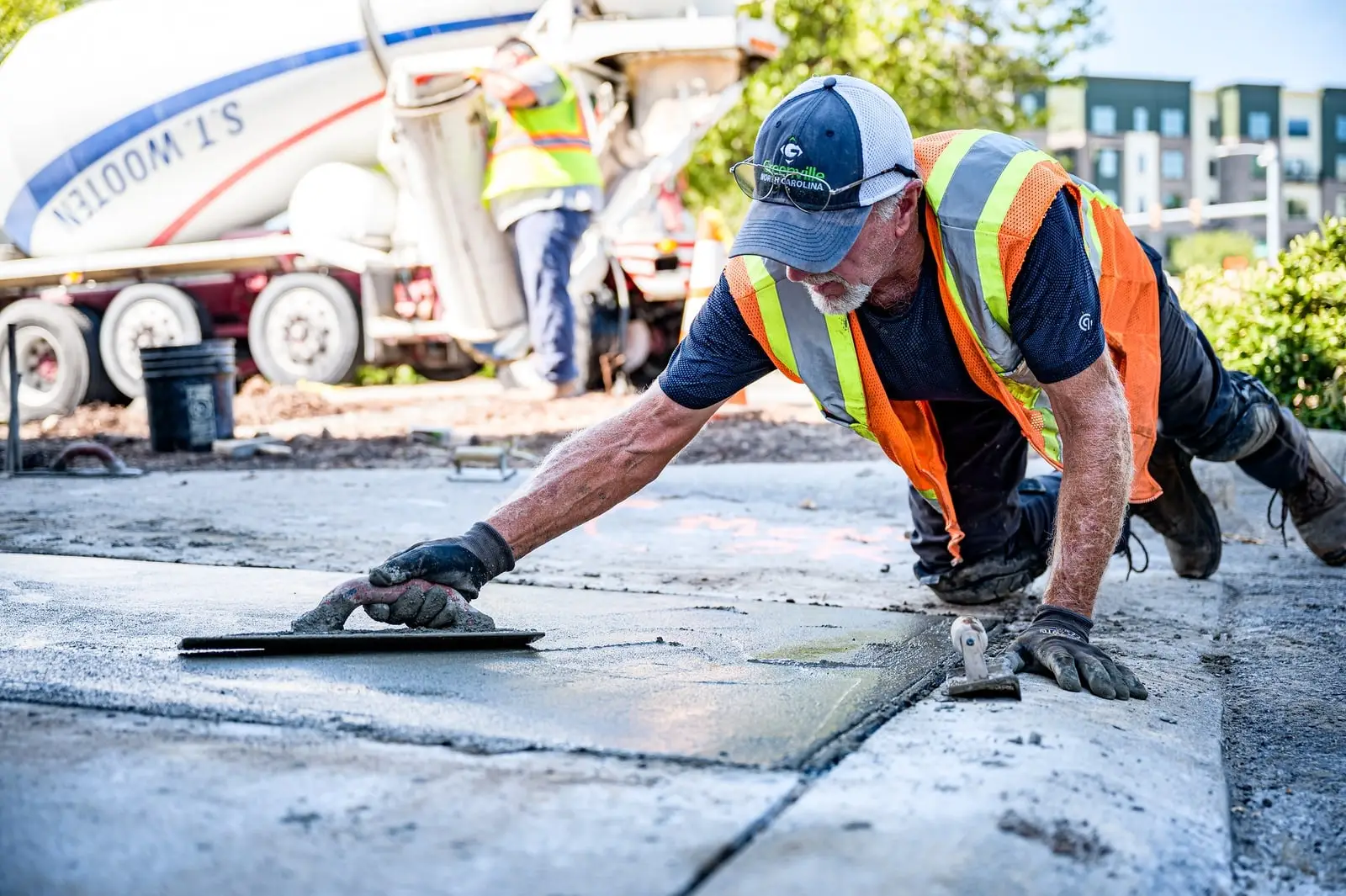
Walkways get less attention than driveways, but they matter for everyday safety. A walk that heaves, cracks into uneven pieces or holds ice turns into a trip-and-slip hazard, and it’s usually the first thing visitors notice about an entry.
What walkway and sidewalk projects include
- Front entry walks from the driveway or street to the front door.
- Side-yard and backyard paths connecting gates, patios, sheds and garden areas.
- Sidewalk panel replacement where sections have heaved, sunk or broken.
- Walkway extensions and reroutes when landscaping or entrances change.
- Decorative walks with borders, exposed aggregate or stamped finishes.
Signs a walkway needs attention
- Panels that have lifted or dropped, creating an edge you can catch a toe on.
- Cracks that have broken sections into loose pieces.
- Water or ice that collects in low spots every winter.
- Scaling or flaking where snowmelt and deicers sit.
- A walk that’s too narrow, or doesn’t go where people actually walk.
If just one or two panels are affected, concrete repair or single-panel replacement may be enough. The repair vs. replacement guide can help you decide.
Planning considerations
Layout and width
The best walkways follow the path people naturally take. Watch where foot traffic cuts across the lawn and plan around it. Main walks should be wide enough for two people or for a stroller or wheelchair, while utility paths can be narrower. Gentle curves look inviting but add forming work.
Slope, drainage and transitions
Walks should shed water to the side so it doesn’t puddle and freeze. Where a walk meets the house, porch or steps, plan the transition so water runs away from the foundation and there’s no lip to trip over. On sloped Centerville lots, a long walk may need steps or a gentler route to keep it comfortable and safe in winter.
Base preparation and joints
Walkways are thinner than driveways, which makes a consistent, compacted base even more important. Control joints at regular intervals guide cracking into straight lines. Isolation joints where the walk meets the house, driveway or steps allow each piece to move independently.
Trees and roots
Many older sidewalk problems come from tree roots lifting panels. When planning a new walk or replacing heaved sections, consider distance from trees and whether root barriers or a rerouted path make sense.
Public sidewalks and the right-of-way
The sidewalk along the street is typically in the public right-of-way, and work there can involve city standards or approvals. Before replacing sidewalk, curb or gutter at the street, contact Centerville City Public Works to confirm what applies. Centerville also offers a park strip application for work in the strip between sidewalk and street. Requirements vary, so check first.
Walkways and Utah winters
Walkways see foot traffic in snow, ice and slush, which means shoveling, deicers and freeze-thaw cycles all take a toll. A broom finish gives better traction than a smooth one. Good drainage keeps meltwater from refreezing on the surface. Limit deicer use, especially during the first winter, and follow your installer’s recommendations on sealing. The concrete and Utah weather guide has more on winter care.
How a walkway project typically goes
- Layout: mark the route and width, check slope, and plan joints and transitions.
- Removal and excavation: remove old concrete, pavers or sod and excavate to depth.
- Base and forms: compact the subgrade and base, then set forms to grade.
- Placement and finishing: pour and finish with the chosen texture, then tool joints and edges.
- Curing and cleanup: protect the new walk while it cures and restore landscaping along the edges.
What affects the cost of a walkway
- Length, width and shape: total square footage and the complexity of curves.
- Removal: breaking out old concrete or pavers.
- Grading: slopes that need steps, landings or extra forming.
- Finish: broom is typically the most economical; exposed aggregate and decorative work add cost.
- Access: backyard paths may require wheelbarrows or a pump.
- Right-of-way work: public sidewalk or park strip sections and related requirements.
Walkways are often combined with steps, patios or driveway work. Bundling nearby projects into one visit can reduce setup and delivery costs.