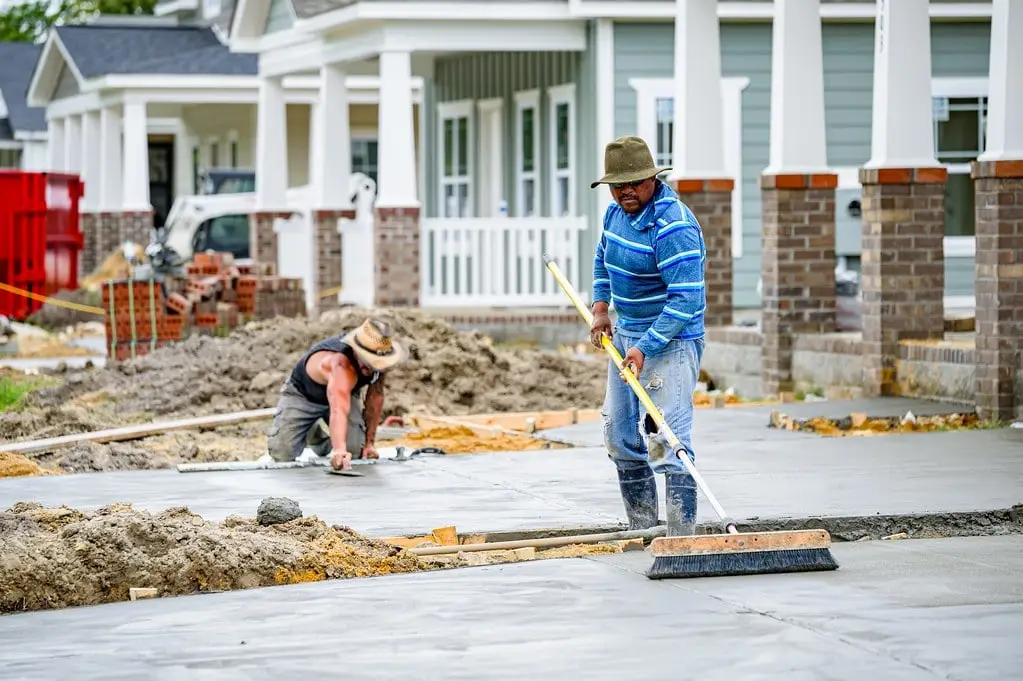
Replacement is the right call when concrete has failed beyond what patches can fix. It’s a bigger investment than repair, so the most important part of a replacement project is understanding why the old concrete failed and making sure the new work doesn’t repeat it.
What concrete replacement involves
A replacement project removes the existing concrete, corrects what’s underneath and builds new concrete from the base up. Common projects include:
- Driveway replacement, whole or in sections, often combined with widening. See concrete driveways.
- Walkway and sidewalk replacement where panels have heaved, sunk or broken into trip hazards. See walkways and sidewalks.
- Patio replacement for patios that have settled toward the house or cracked badly.
- Step replacement when steps have pulled away from the house, crumbled or become unsafe.
- Garage apron and pad replacement where settling has created a lip or drainage problem.
Signs replacement is the better option
- Cracks across much of the surface, or cracks that keep widening season after season.
- Panels that have sunk or heaved enough to create trip edges or send water toward the house.
- Scaling or crumbling over large areas rather than a few spots.
- Repairs that have failed and been redone more than once.
- Concrete that is too thin, too narrow or poorly built for how it’s used now.
- A planned change in layout, such as a wider driveway or a new walkway route, that makes rebuilding sensible anyway.
If the damage is limited, concrete repair may give you more years for less money. The repair vs. replacement guide covers the decision in depth.
Finding and fixing the cause
When a slab fails early, the concrete is rarely the whole story. Common causes include:
- Weak or poorly compacted base: the ground under the slab settles, leaving the concrete unsupported.
- Water under the slab: downspouts, irrigation, poor grading or pooling water softening the base and freezing in winter.
- Thin or unreinforced sections carrying loads they weren’t built for, such as trucks on a walkway.
- Poor joint layout: joints too far apart or too shallow, leading to random cracking.
- Surface durability problems: concrete that wasn’t suited for freeze-thaw exposure or wasn’t cured properly.
- Tree roots lifting panels, especially along older sidewalks.
A good replacement quote explains which of these apply to your project and how the new work will address them.
Replacement in Centerville
Freeze-thaw cycles, snowmelt and deicing salts make durability details more important here than in milder climates. Replacement is a chance to ask for air-entrained concrete, proper curing, good drainage and a sensible joint layout. If the project includes a driveway approach, curb, gutter or public sidewalk, check Centerville City requirements before work starts; Public Works provides an Approach Permit Application and drive-approach plan requirements. Link details are in the project planning guide.
How a replacement project typically goes
- Assessment and scope: decide what’s being removed, why it failed and what the new layout will be.
- Approvals and utility locates: handle any required city approvals and have underground utilities marked through Blue Stakes of Utah 811.
- Demolition and haul-away: break out the old concrete and remove it from the site.
- Base correction: remove soft soil, fix grading and drainage, and place and compact new base material.
- Forms and reinforcement: set forms to the right grades and place reinforcement as designed.
- Placement, finishing and joints: pour and finish the new concrete, then tool or saw-cut control joints.
- Curing and restoration: protect the new concrete while it cures, then remove forms and restore edges and landscaping.
What affects the cost of concrete replacement
- Removal: the thickness, amount of reinforcement and square footage of concrete being demolished.
- Disposal: hauling and disposal fees for broken concrete.
- Base work: how much soil must be removed or replaced, and any drainage corrections.
- New concrete scope: size, thickness, reinforcement and finish of the new slab.
- Access: how easily equipment and concrete trucks can reach the area.
- City-related work: approaches, curb, gutter or public sidewalk sections and related requirements.
Replacement quotes can vary widely because contractors make different assumptions about base work. Comparing itemized quotes that spell out demolition, base depth, thickness, reinforcement and joint layout makes the differences clear.